
Old Money Fashion for Women
Old money fashion for women represents a quiet, enduring form of elegance. It is not driven by trends, seasonal hype, or visible status symbols. Instead, it is rooted in tradition, discretion, and an appreciation for quality that transcends time. This style communicates confidence without excess and sophistication without display.
As modern fashion becomes increasingly fast-paced and logo-driven, old money fashion stands apart by offering stability, restraint, and permanence. It appeals to women who value thoughtful dressing and understand that true style does not require constant reinvention.
This guide explores the foundations of old money fashion for women, offering a clear and professional perspective on how to adopt this aesthetic authentically.
1.Understanding Old Money Fashion
Old money fashion originates from generations where wealth was inherited rather than newly acquired. In such environments, clothing was never used to prove status. The purpose was function, refinement, and social appropriateness.
For women, this resulted in wardrobes built around timeless silhouettes, natural fabrics, and neutral palettes. Each piece served a purpose and could be worn repeatedly without appearing outdated. The emphasis was always on elegance, not attention.
This philosophy continues today. Old money fashion does not chase trends. It preserves a consistent identity through restraint and discipline.
2.The Core Principles of Old Money Style
Emphasis on Quality Materials
Fabric choice is central to old money fashion. Natural materials such as wool, cotton, silk, linen, and cashmere dominate these wardrobes. They age well, feel comfortable, and maintain structure over time.
Synthetic-heavy fabrics are generally avoided, as they often appear less refined and do not wear gracefully. In old money fashion, texture and drape matter as much as appearance.
Precision in Fit
Clothing should fit cleanly and comfortably. Old money style avoids extremes. Garments are neither overly tight nor excessively loose. Tailoring is subtle but precise, ensuring each piece complements the wearer’s natural shape.
Well-fitted clothing conveys intention and care, both of which are central to this aesthetic.
Simplicity in Design
Design elements remain minimal. There is little room for excessive embellishment, bold patterns, or decorative hardware. Buttons are understated, seams are clean, and details are discreet.
The goal is to let the overall composition speak, rather than any single element.
Neutral and Cohesive Color Palette
Old money fashion relies on a restrained palette. Shades such as ivory, cream, beige, camel, navy, charcoal, brown, and soft white form the foundation. These colors mix effortlessly and create harmony across outfits.
Bright or trendy colors are used sparingly, if at all.
3.Building an Old Money Wardrobe for Women
A successful old money wardrobe is intentional and concise. Every item should integrate seamlessly with the rest of the collection.
Tops and Blouses
Crisp cotton shirts, silk blouses, and fine knit tops are essential. These pieces are versatile, suitable for both casual and formal settings, and form the backbone of most outfits.
(Classic shirts and polos)that follow these principles can be found within curated selections of Old Money polo shirts, where simplicity and structure take priority.
Knitwear
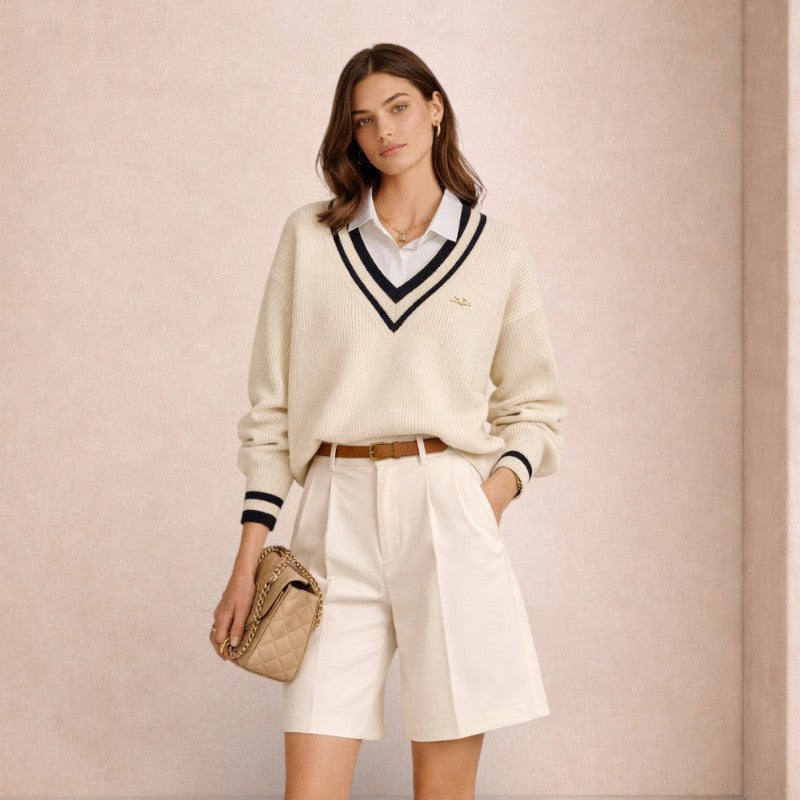
Knitwear is a cornerstone of old money fashion, particularly in transitional and colder seasons. Lightweight sweaters, cardigans, and pullovers in cashmere or merino wool add warmth without bulk.
These pieces layer easily and elevate even the simplest outfits. Refined (knitwear options),which reflect this understated approach.
Bottoms and Skirts
Tailored trousers, straight-leg pants, midi skirts, and classic denim define the lower half of an old money wardrobe. These pieces emphasize clean lines and balance.
Trends such as extreme silhouettes or distressed finishes are avoided. Instead, the focus remains on longevity and versatility.
Outerwear
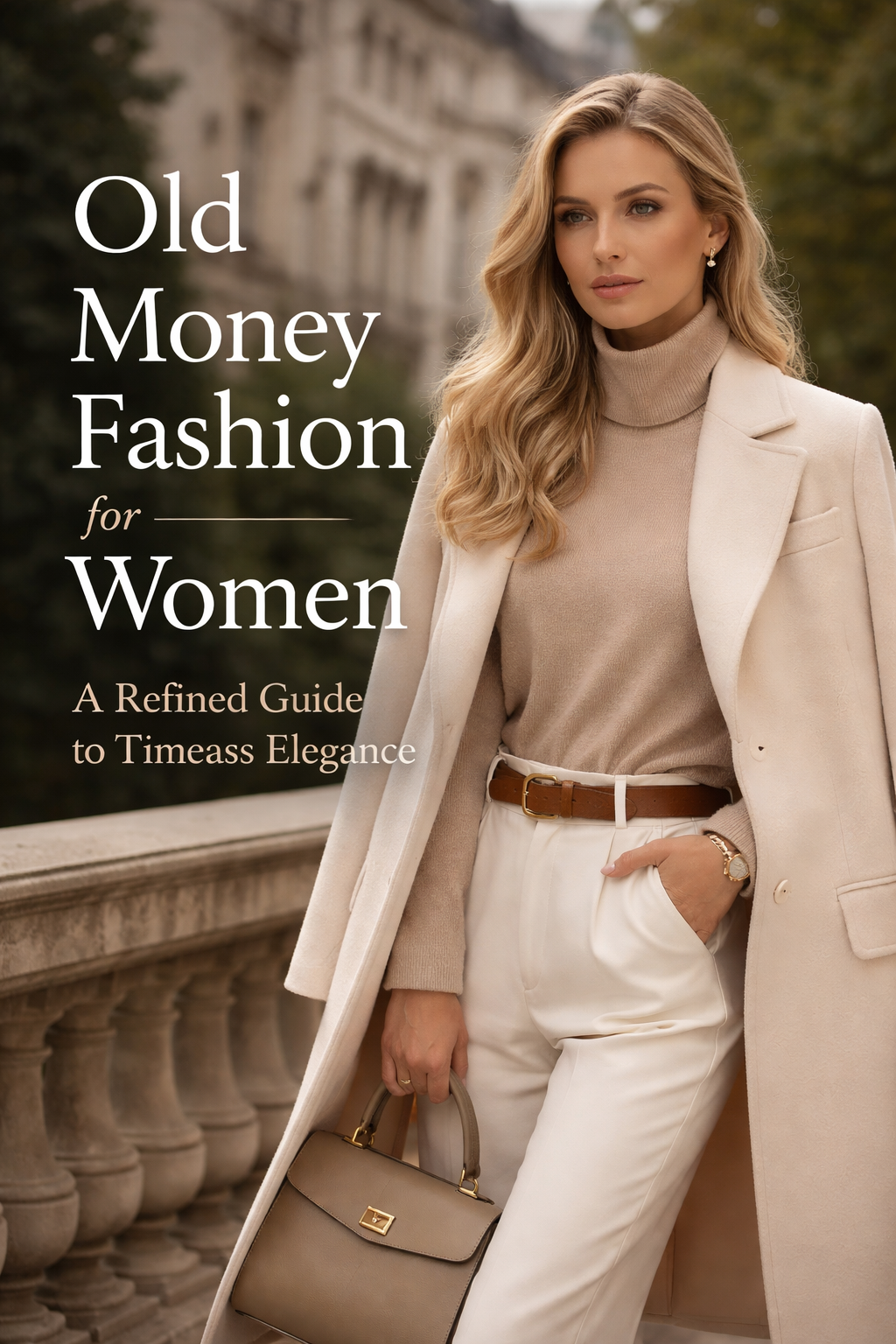
Outerwear often defines the overall look. Wool coats, trench coats, structured blazers, and classic jackets are staples. These garments are chosen carefully, as they are worn frequently and across seasons.
A well-made coat in a neutral shade can remain relevant for decades.
4.Footwear in Old Money Fashion
Footwear is practical, elegant, and understated. Logos are minimal or absent. Materials are natural, typically leather or suede.
Common choices include loafers, ballet flats, low-heeled pumps, ankle boots, and simple leather sneakers. Shoes are chosen to complement the outfit rather than dominate it.
Timeless footwear that aligns with these standards can be explored through collections such as (Old Money Shoes).
5.Accessories with Restraint
Accessories are used sparingly and with intention. Jewelry is minimal, often limited to fine gold pieces, pearls, or a classic watch. Bags are structured, functional, and free from excessive branding.
Scarves, when worn, are made from silk or wool and styled effortlessly. In old money fashion, accessories support the outfit rather than define it.
6.Seasonal Interpretation of Old Money Style
Spring and Summer
Lighter fabrics such as linen and cotton take precedence. Dresses are modest in cut, trousers are breathable, and colors lean toward lighter neutrals.
Footwear remains structured but comfortable, and layering is kept minimal.
Autumn and Winter
Colder months emphasize layering with fine knits, wool coats, scarves, and tailored trousers. Earth tones and deeper neutrals become more prominent.
Warmth is achieved through quality fabrics rather than oversized silhouettes.
7.Old Money Fashion and Quiet Luxury
While often used interchangeably, old money fashion and quiet luxury are not identical. Quiet luxury is a modern adaptation that sometimes intersects with trends. Old money fashion is more static and tradition-based.
Understanding this distinction helps maintain authenticity and avoid drifting toward trend-driven interpretations.
For background on the evolution of quiet luxury, this reference provides useful context(https://en.wikipedia.org/wiki/Quiet_luxury).
8.Dressing Old Money on a Thoughtful Budget
Old money fashion does not require excessive spending. It requires patience and discernment.
Investing in fewer, higher-quality pieces yields better results than frequent trend-based purchases. Thrift stores, vintage shops, and tailoring services can be valuable resources.
The objective is not accumulation, but curation.
9.Presentation Beyond Clothing
Old money style extends beyond garments. Grooming, posture, and demeanor all contribute to the overall impression.
Hair is natural and well-maintained. Makeup is subtle. The overall appearance feels composed and intentional, never overstated.
10.Conclusion
Old money fashion for women is defined by timelessness, restraint, and confidence. It is not about appearing wealthy, but about presenting oneself with dignity and composure.
By focusing on quality materials, precise fit, neutral colors, and thoughtful styling, women can adopt this aesthetic in a way that feels authentic and enduring.
True elegance does not demand attention. It earns respect quietly.